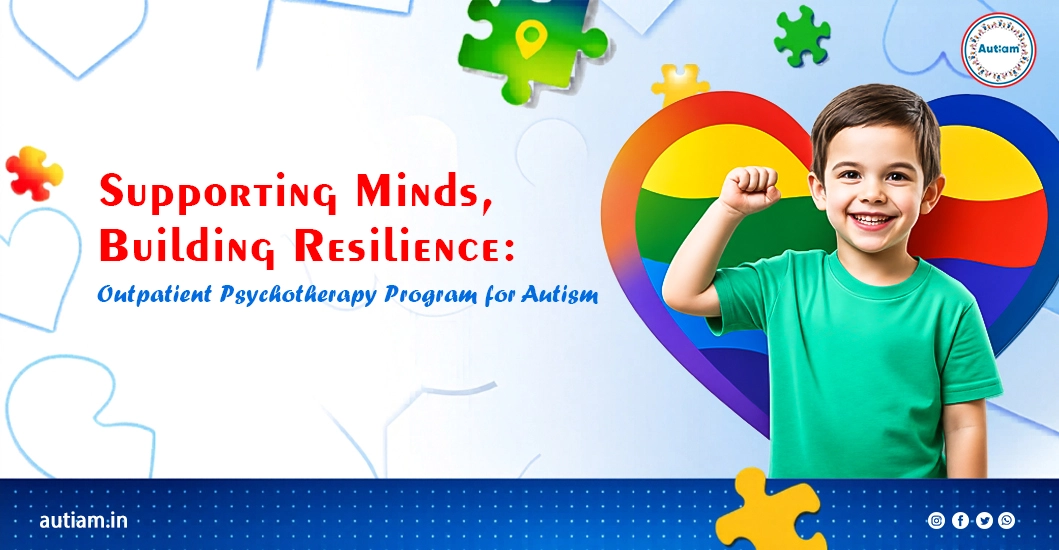
If your child has autism and is struggling emotionally, you are not alone. Many families across India face the same question: where do we get the right mental health support without turning our child’s life upside down? An outpatient psychotherapy program for autism gives you exactly that. It is a planned, structured therapy service in which your child or family member comes in for regular sessions and goes home the same day. No hospitalisation. No disruption to school or daily life. Just consistent, professional support at a pace that works for your family.
Autism psychotherapy is about more than managing behaviour. It helps autistic children and adults understand their feelings, handle anxiety, build confidence, and learn to express themselves better. When delivered through a good outpatient autism therapy program, the difference it makes in daily life can be significant.
Note: This article is for general information only. Please speak to a qualified psychologist, developmental paediatrician, or psychiatrist before starting any therapy program for yourself or your child.
What Is an Outpatient Psychotherapy Program for Autism?
An outpatient psychotherapy program for autism is a set of regular therapy sessions held at a clinic, hospital, or therapy centre, where the person attends the session and returns home afterwards. It is different from residential care, where someone stays overnight, or day programs that run for many hours daily. Outpatient therapy fits into normal life.
In India, outpatient autism therapy is available at child development clinics, mental health centres, and private therapy practices in cities such as Mumbai, Delhi, Bengaluru, Hyderabad, Chennai, Pune, and Kolkata. Sessions are usually held once or twice a week. The frequency depends on the child’s needs, age, and the therapy’s focus.
A complete outpatient psychotherapy program for autism usually includes:
- One-on-one therapy sessions for the child or adult with autism
- Autism counselling programs focused on emotional challenges, anxiety, and social situations
- Regular guidance sessions for parents and caregivers
- Progress reviews to see what is working and what needs to change
- ers, when needed
The purpose of this kind of therapy is not to change who an autistic person is. It is to give them theCoordination with other professionals, such as occupational therapists and teach tools to understand themselves better and manage a world that does not always understand them.
Who Can Benefit from Autism Psychotherapy?
Autism psychotherapy helps people of all ages. The approach varies with the person’s age and needs, but the core goal remains the same: better emotional health and stronger coping skills.
Young children (ages 4 to 12) often struggle to name or understand their feelings. Play-based therapy and structured activities help them build emotional vocabulary, reduce anxiety, and feel safer in their day-to-day environment.
Teenagers (ages 13 to 18) face a different set of pressures. School stress, friendships, identity, and the push toward independence all happen at once. Emotional support therapy for autism during these years helps teenagers handle overwhelming emotions, manage social situations, and feel better about who they are.
Adults on the autism spectrum often carry a lot of unspoken emotional weight. Years of being misunderstood, feeling different, or masking who they are just to fit in can lead to burnout, anxiety, and depression. Outpatient autism therapy gives adults a private, judgment-free space to work through these experiences.
Parents and caregivers benefit too. When parents better understand how their child experiences the world emotionally, they respond more effectively. That makes home a calmer, safer place for everyone.
Emotional Challenges in Autism: Why Mental Health Support Cannot Wait
Most autism services in India focus on communication, behaviour, and learning. That is important, but mental health support for autism is just as critical and is often the part that gets missed. Autistic children and adults deal with emotional difficulties that are real, ongoing, and deep-rooted. Ignoring them does not make them go away.
Here are some of the most common emotional struggles autistic individuals face:
- Trouble naming feelings: Many autistic people find it hard to identify what they are actually feeling in a given moment. They may know something feels wrong,g but cannot explain what or why.
- Big emotional reactions: Feelings can go from zero to overwhelming very quickly, and calming down without support is genuinely hard.
- Feeling left out or misunderstood: Years of social rejection, correction, or comparison to others can quietly damage a child’s self-worth.
- Exhaustion from masking: Many autistic people spend enormous energy trying to act “normal” in public. Over time, this is exhausting and increases anxiety significantly.
- Grief over unmet social expectations: Missing out on friendships, birthday invitations, or class activities hurts deeply, even if the child does not always show it.
Autism counselling programs that work through these emotional experiences help build real inner strength. That strength shows up in behaviour, in learning, and in how a child relates to people around them.
Autism Anxiety Therapy: Helping Your Child Manage Stress and Fear
Autism anxiety therapy is one of the most important parts of any outpatient psychotherapy program for autism. Anxiety is extremely common in autism. Estimates suggest that between 40% and 60% of autistic individuals experience significant anxiety, and in many cases, it goes undiagnosed for years.
Anxiety in autism does not always look like worry or nervousness. It often manifests as stomach aches before school, intense meltdowns in busy places, refusing to try new things, clinging to routines, or a complete shutdown in unfamiliar situations.
Good autism anxiety therapy inside an outpatient autism therapy program usually includes:
- Teaching the child about anxiety itself: Understanding that anxiety is the body’s alarm system, not something to be ashamed of, is often the first step.
- Spotting early warning signs: Children learn to recognise the physical signs of anxiety, such as a tight chest, fast breathing, or a knot in the stomach, before things escalate.
- Thinking differently about scary situations: With gentle guidance, children and adults learn to question thoughts like “something bad will definitely happen” and replace them with more balanced ones.
- Facing fears step by step: Rather than avoiding everything that feels scary, therapy slowly introduces situations in a safe, controlled way.
- Personal calming tools: Each person gets strategies that actually work for them, whether that is slow breathing, a sensory object, a movement break, or a safe phrase.
With regular autism anxiety therapy, most children show clear improvement in how they handle situations that used to feel impossible.
Counselling Approaches Used in Autism Psychotherapy Programs
There is no single approach that works for every autistic person. Good autism counselling programs use different methods depending on the individual’s age, communication style, and what they need the most help with.
Cognitive Behavioural Therapy (CBT) helps people notice the link between thoughts, feelings, and behaviour. For autistic individuals, it is adapted with visual tools, simple language, and clear steps. It has the strongest research support for reducing anxiety and emotional difficulties in autism.
Acceptance and Commitment Therapy (ACT) teaches people to stop fighting difficult feelings and instead focus on what truly matters to them. It is especially useful in emotional support therapy for autism for older teenagers and adults who have been struggling with identity and self-worth.
Dialectical Behaviour Therapy (DBT) Skills DBT gives people concrete skills for managing intense emotions, tolerating distress without reacting impulsively, and improving relationships. Many autistic teenagers find DBT skills incredibly practical and easy to apply in real life.
Narrative Therapy. This approach helps a person tell their own story, focusing on their strengths rather than their deficits. For autistic young people still figuring out who they are, this can be powerful.
Play Therapy and Art-Based Therapy For younger children or those who do not communicate easily through words, play therapy and creative approaches open up emotional expression in a natural, pressure-free way.
A skilled therapist offering autism psychotherapy will always choose and adapt the approach to suit the individual, not what is most convenient to deliver.
Parent Guidance Sessions: Supporting the Whole Family
Mental health support for autism does not stop with the child. Parent guidance sessions are a core part of any solid outpatient psychotherapy program for autism, not an optional extra.
When parents understand what is driving their child’s emotional responses and learn how to support them at home, the therapy works far better. Many of the strategies introduced in therapy need to be practised daily at home, at school pick-up, during meals, and at bedtime. That only happens when parents are informed and involved.
What is typically covered in parent guidance sessions:
- Why your child responds the way they do to certain situations, people, or environments
- How to stay calm and effective during your child’s meltdowns or shutdowns
- Ways to talk to your child about feelings in language they understand
- Building home routines that reduce daily anxiety
- Looking after your own mental health as a caregiver
- Working with schools, teachers, and other therapists as a team
Across India, including in cities like Hyderabad, Bengaluru, Mumbai, and Delhi, many autism counselling programs now offer parent guidance as a separate service for families who need it independently of one-to-one child therapy.
Building Long-Term Mental Wellness Through Outpatient Autism Therapy
Good mental health support for autism is not a quick fix. It is built slowly, over time, through regular sessions, consistent practice, and ongoing review. One round of therapy rarely covers everything, and that is completely normal.
Long-term outpatient autism therapy looks like this in practice:
- Regular check-ins where the therapist reviews goals and adjusts the approach based on how the individual has grown and changed
- Support through big transitions such as changing schools, starting college, moving cities, or entering the workforce
- Extra sessions during tough periods like exam season, family stress, or social difficulties
- Group therapy or peer programs where autistic individuals can practise skills and connect with others who share similar experiences
In several cities across India, including Chennai, Pune, Kolkata, and Hyderabad, long-term structured autism counselling programs are becoming more widely available. Online therapy options have also expanded significantly, making consistent support accessible even for families in smaller cities and towns.
How Behavioural Counselling for Autism Supports Emotional Growth
Behavioural counselling for autism helps people understand the connection between what they think, what they feel, and what they do. It provides autistic individuals and their families with practical strategies for managing situations that often lead to distress or conflict.
The goal of behavioural counselling for autism is not to force an autistic person to behave like someone they are not. The goal is to reduce behaviours that cause real harm or unhappiness, while building stronger communication and self-advocacy skills.
When part of a broader outpatient psychotherapy program for autism, behavioural counselling works alongside emotional therapy to support the whole person, not just the visible behaviour.
Why Regular Outpatient Autism Therapy Gives Better Results
The biggest predictor of success in outpatient autism therapy is consistency. Autistic individuals often take longer to build trust with a therapist, and meaningful progress requires time spent in a safe, predictable relationship. Changing therapists frequently or attending sessions irregularly makes it that much harder.
Things that make the biggest difference in outcomes:
- Showing up to sessions on a regular, predictable schedule
- Parents actively applying strategies between sessions
- Good communication between the therapist, school, and other professionals
- A therapy space that is calm, quiet, and sensory-friendly
- A therapist who genuinely understands autism psychotherapy and has hands-on experience working with autistic individuals
When these are in place, families regularly report fewer meltdowns, less anxiety, better sleep, improved school attendance, and a child who simply feels better about themselves.
Conclusion
Your child’s emotional well-being is not separate from their overall development. It is central to it. An outpatient psychotherapy program for autism gives autistic children, teenagers, and adults access to real, practical mental health support in a format that fits their lives.
From autism anxiety therapy and behavioural counselling for autism to emotional support therapy for autism and parent guidance, outpatient programs address the full picture of emotional health. Families across India are finding that when the emotional side of autism gets proper attention, everything else gets a little easier, too.
Your child deserves to feel understood, supported, and capable. That starts with the right help.
Disclaimer: This article is for general educational purposes only. It is not a substitute for professional advice. Please consult a qualified mental health professional or developmental specialist before starting any therapy or treatment program.
Ready to take the next step? Book a Consultation with our specialists and give your child the support they deserve.